
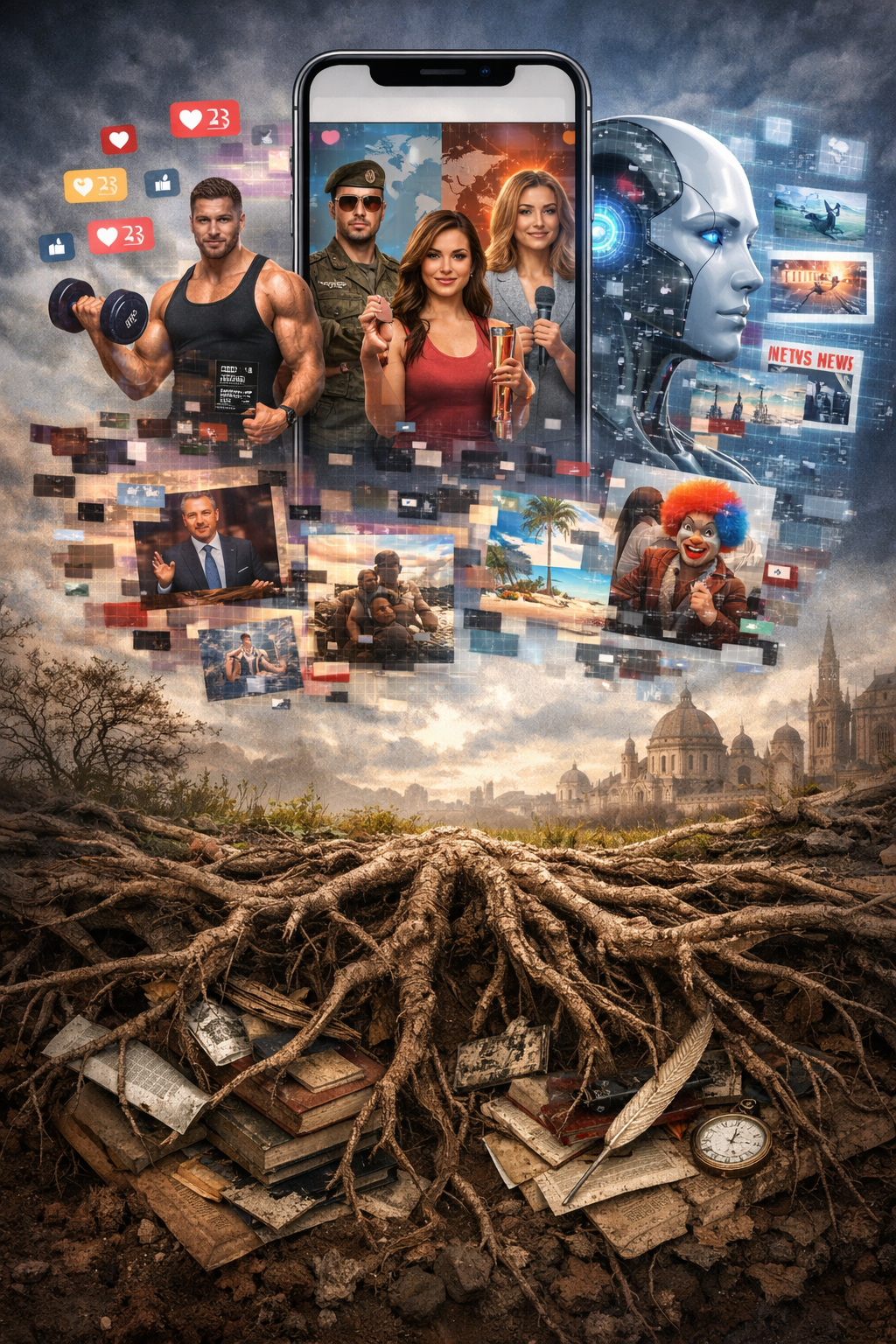
Open Instagram today and you will find a strange new phenomenon.
Everyone is suddenly an expert.
A fitness expert.
A geopolitics analyst.
A product reviewer.
A comedian.
A life coach.
A nutritionist.
All in one feed.
And often, all in one person.
A 30-second reel today claims to explain complex global conflicts.
A two-minute video promises to transform your body.
Another thread confidently reviews products the creator has never used.
The problem is not content creation. The problem is the illusion of authority.
The Rise of the “Instant Expert Economy”
Social media platforms reward three things above all else:
Speed.
Virality.
Engagement.
Accuracy, depth and responsibility rarely make the algorithmic priority list.
As a result, a new economy has emerged, the Instant Expert Economy.
Here, credibility is not built through years of study or experience.
It is built through clever editing, dramatic storytelling, algorithmic timing and viral hooks.
And if the content sounds convincing, that is often enough.
But Convincing is not the same as Correct.
The Hidden Impact on Viewers
For viewers, the impact is deeper than we realize.
We are slowly becoming a society that consumes information without verifying it,
forms opinions based on 30-second clips, mistakes confidence for competence and confuses popularity with credibility.
Over time, this creates a distorted understanding of reality.
Fitness advice becomes extreme.
Geopolitical narratives become oversimplified.
Product reviews become paid persuasion.
Comedy becomes outrage farming.
And the audience slowly loses the ability to distinguish knowledge from noise.
AI Has Changed the Game Completely
Artificial Intelligence has now accelerated this phenomenon.
AI can now generate scripts, create images that never existed, edit videos instantly, clone voices and fabricate narratives that look authentic.
The technology itself is not the problem.
In fact, AI can be one of the most powerful tools humanity has ever created.
But in the hands of creators chasing views instead of value, AI becomes a tool for manufacturing credibility.
What looks like expertise today may simply be well-packaged automation.
Content is no longer just created.
It is engineered to capture attention, often with little regard for truth.
When Society Consumes More Noise Than Knowledge
Every era of history has had its share of misinformation.
But what is different today is scale and speed.
A misleading narrative can now travel to millions of people in minutes.
And when repeated enough times, it slowly begins to feel like truth.
This is where the danger lies.
Not in one reel.
Not in one influencer.
Not in one viral post.
But in the collective overload of diluted information.
The Risk for the Next Generation
If everything becomes content, something important disappears.
Authentic history.
Future generations will try to understand our time through a digital world filled with edited narratives, exaggerated stories and manufactured realities.
What will they trust?
Which version will be real?
Which voice will represent truth?
The greatest asset we have today is that our understanding of the world still comes from real roots, lived experiences, documented history, verified knowledge and wisdom passed through generations.
But when stories become distorted for views and likes, those roots begin to weaken.
A New Responsibility for the Digital Age
We are entering a decade where the responsibility of information will matter more than ever before.
The challenge is no longer access to information. The challenge is discernment.
Viewers must learn to question what they see.
Creators must remember that influence carries responsibility.
Platforms must begin to recognize that attention alone cannot be the only currency.
If this balance is not restored, the internet risks becoming a place where entertainment replaces education and opinions replace facts.
A Thought Worth Reflecting On
Overdoing anything has consequences.
Too much power corrupts.
Too much wealth distorts priorities.
And too much uncontrolled information can damage collective understanding.
Social media was meant to democratize voices.
But without responsibility, it risks diluting reality itself and a society that cannot trust its information eventually loses something far more valuable than attention.
It loses truth.
Because in a world where everything is content, the rarest thing left is credibility.
Leave a Reply